
Adjusting your car mirrors correctly takes about 30 seconds and it matters more than most people realise. Set them wrong and you’ve got gaps in your vision you don’t even know about. Set them right and you’re safer before the car has moved an inch. This guide covers exactly how to adjust each mirror, what you should be able to see in each one, and how mirrors connect to your driving lessons and the practical driving test.
One thing to sort before you start: get your seat and steering wheel into position first. Mirror adjustment only works if you’re sitting where you’ll actually be sitting when you drive.
How do you adjust a rear-view mirror?
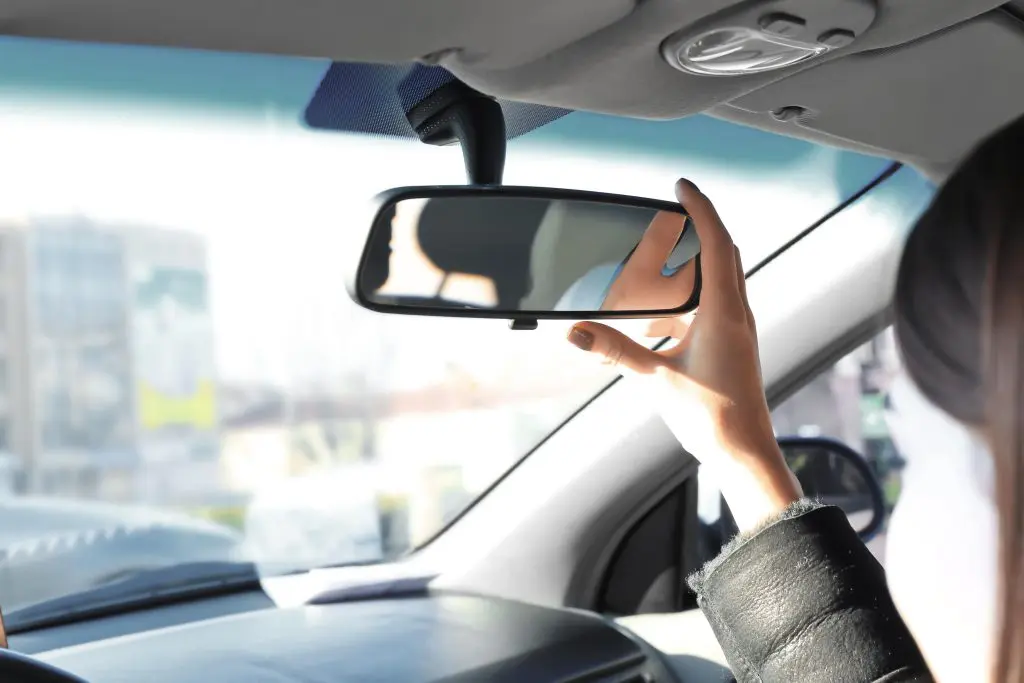
Angle the rear-view mirror so the full rear window is visible, with just a sliver of the car’s interior at the bottom of the frame. You should not be looking at the back of your headrests.
The rear-view mirror sits at the top of your windscreen, in the centre. It gives you a direct view of everything behind the car. Sit in your normal driving position before you touch it. If you lean forward or to the side to adjust it, you’ll end up with a mirror that works for that position, not for when you’re driving normally.
Try to avoid touching the glass itself. Fingerprints obscure your view more than you’d expect, especially at night.
How do you adjust wing mirrors (side mirrors)?
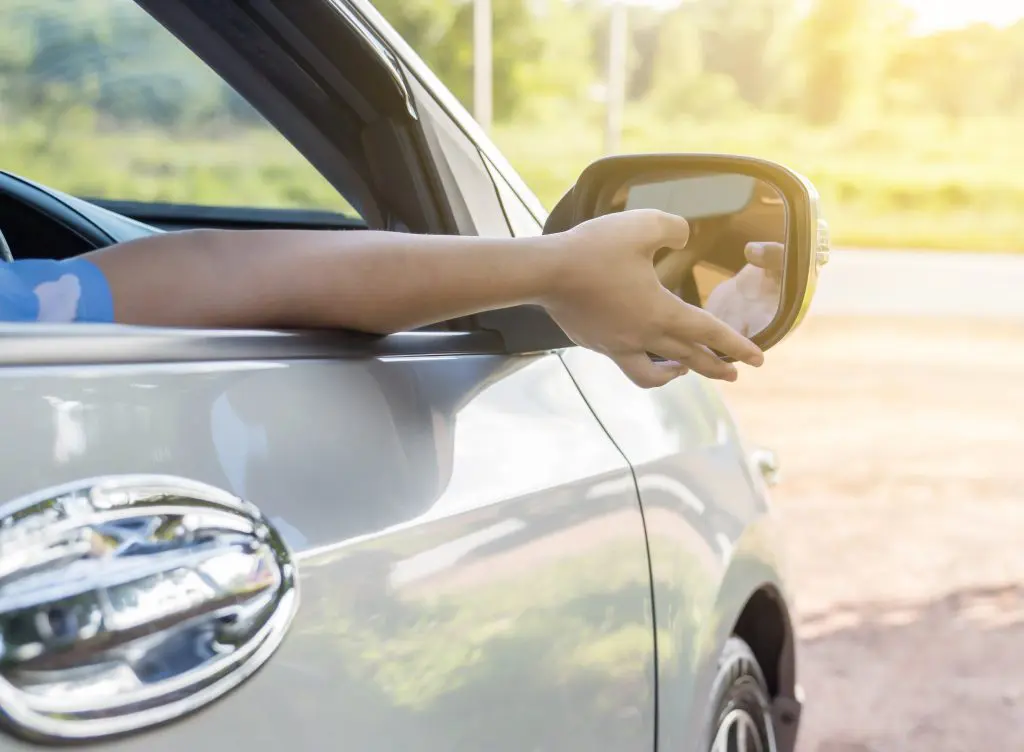
Both wing mirrors should show a thin strip of the car on the inner edge, with the road dominating the rest of the view. The horizon should fall roughly in the middle of the mirror vertically. Adjust them from your normal driving position, not leaning across.
Wing mirrors sit on the outside of the car on each door. They’re slightly curved to give a wider angle of view than a flat mirror would. Depending on your car, you’ll adjust them with electric controls on the door panel, a manual lever, or by physically moving the mirror housing.
Right side mirror
Adjust until a thin strip of the car is visible on the left-hand edge of the mirror. The road should fill most of the view, with the horizon roughly centred vertically. This mirror works hard when you’re moving off, overtaking, or joining a dual carriageway, so it’s worth getting right.
Left side mirror
The setup is almost identical to the right, with one key difference: angle the left mirror slightly lower. This gives you a view of the kerb when you’re pulling over or completing a manoeuvre, which is genuinely useful. You should still be able to see the end of the road behind you, with more of the kerb visible in the lower portion.
If you have manual controls and it’s awkward to reach, move it a little at a time. If someone’s in the passenger seat, ask them to guide you.
What is a blind spot?
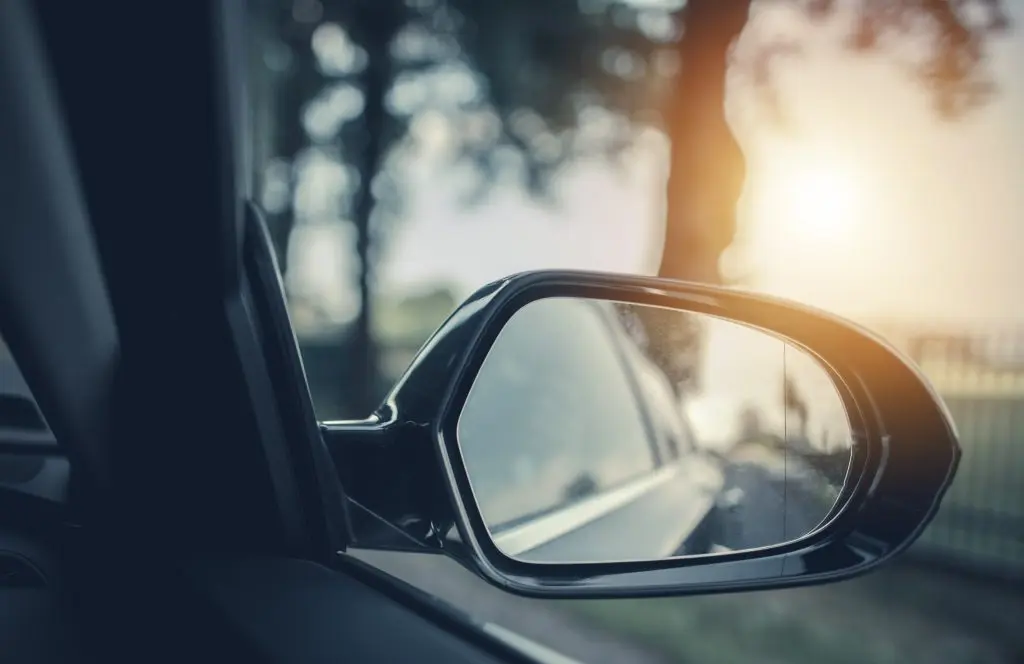
A blind spot is any area around your car that isn’t visible through your windscreen or mirrors. Every car has them, usually to the rear sides of the vehicle. Their size varies depending on the make and model.
Even with mirrors set up perfectly, you can’t see everything. That’s why, before you move off, change lanes, or turn at a junction, you need to do a physical check — looking over your shoulder. The Highway Code is clear on this: before moving off, check your mirrors and look round to cover any blind spots. Your mirrors and your shoulder check work together.
When should you adjust your car mirrors?
Every time you sit down to drive, or any time your seating position changes. The checks take seconds and they’re worth doing every single time. Specifically:
- Every time you get into a car you share with another driver – their seating position is different to yours and the mirrors will be wrong for you.
- Any time you’ve adjusted your seat since you last drove.
- Before driving any unfamiliar vehicle, even if you’re only moving it a short distance.
- Never while moving — if you realise your mirrors aren’t right once you’re on the road, pull over somewhere safe before touching them, as this can compromise safety.
Is adjusting mirrors part of the driving test?
Mirror adjustment is part of the cockpit drill (the routine you should run through yourself every time you get in the car). Your examiner won’t prompt you to do it, but they do expect it to happen before you move off during the practical driving test. Your instructor will cover it during your first few driving lessons.
The cockpit drill covers more than mirrors. It includes checking your seat, headrest, seatbelt, and steering wheel. Mirrors are just one part of the routine, but they’re the part most people get wrong or skip.
Frequently asked questions
How should car mirrors be adjusted?
Set the rear-view mirror to show the full rear window with minimal interior visible. For both wing mirrors, position them so a thin strip of the car appears on the inner edge, and the road fills the rest of the view. Angle the left mirror slightly lower to give you a view of the kerb.
What should you see in your rear-view mirror?
The full rear window and the road behind the car. You should not see the back of your seats or a large portion of the car’s interior. The mirror is there to show you what’s behind the vehicle, not inside it.
What is the correct position for wing mirrors?
Both wing mirrors should show a thin strip of the car on the inner edge, with the horizon centred vertically and the road filling most of the view. The left mirror should be angled slightly lower to show the kerb when pulling in or completing a manoeuvre.
What is a blind spot?
A blind spot is an area around your car that isn’t visible through your mirrors or windscreen. Even with mirrors correctly set, blind spots exist to the rear sides of most vehicles. A shoulder check before moving off or changing direction is the only way to cover them.
Should you adjust mirrors before or after the seat?
After. Set your seat and steering wheel position first, then adjust your mirrors to suit that position. If you adjust mirrors before sorting your seat, you’ll have to redo them anyway.
How do I adjust wing mirrors without power controls?
Move the mirror housing directly, a small amount at a time. Sit in your driving position and check the view as you go. If the reach is awkward, a passenger can guide you while you describe what you need to see.
Do I need to check mirrors every time I drive?
Yes. If you share a car, or if your seat position has changed since your last drive, the mirrors will need resetting. It takes under a minute and it’s worth doing every time you get behind the wheel.

Ready to start your driving lessons?
Bill Plant Driving School has over 1,000 instructors nationwide, all trained to the same award-winning standards. Find a driving instructor near you to get started!