L-plates are a vital part of the UK learning-to-drive journey. If you’re a new driver or a parent supporting one, understanding how to display L plates on a car — and follow the legal requirements — is essential.
In this ultimate guide from Bill Plant Driving School, we want to help you learn outside of your driving lessons. So we have put together this guide where we’ll cover everything from what learner plates are, how to attach them properly, the legal rules around driving with L plates, and even what happens after you pass your test. We’ll also explore P plates, insurance advice, and key FAQs, so you’re completely clued up and confident on the road.
What are L-plates

L-Plates are the white square with a red “L” that you see stuck to cars all over the country. They’re used to show that there’s a learner driver behind the wheel of a car. And, if you’re a learner who wants to learn in your own time, you’ll need one of these plates attached to your car.
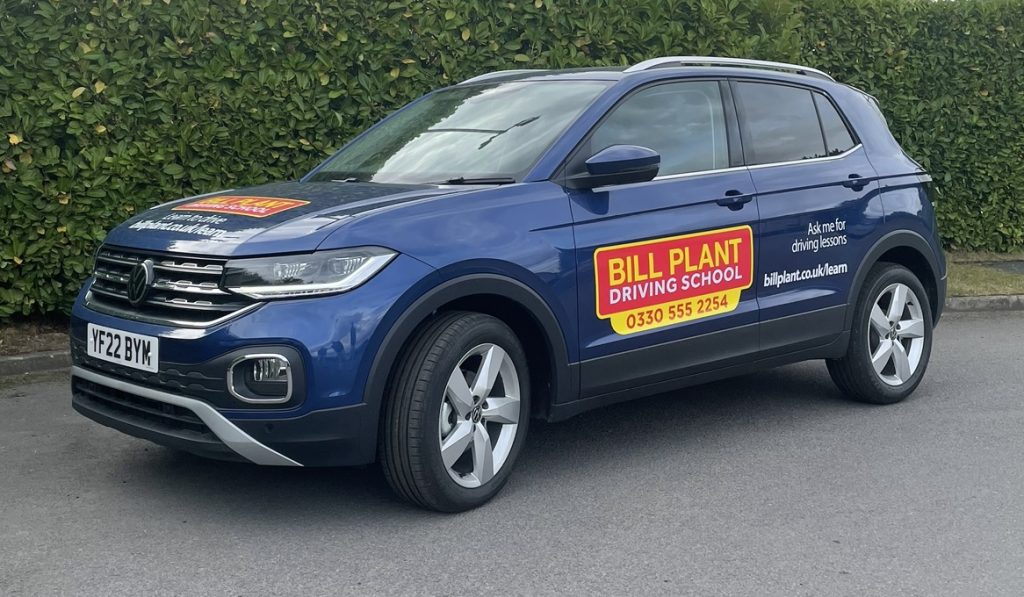
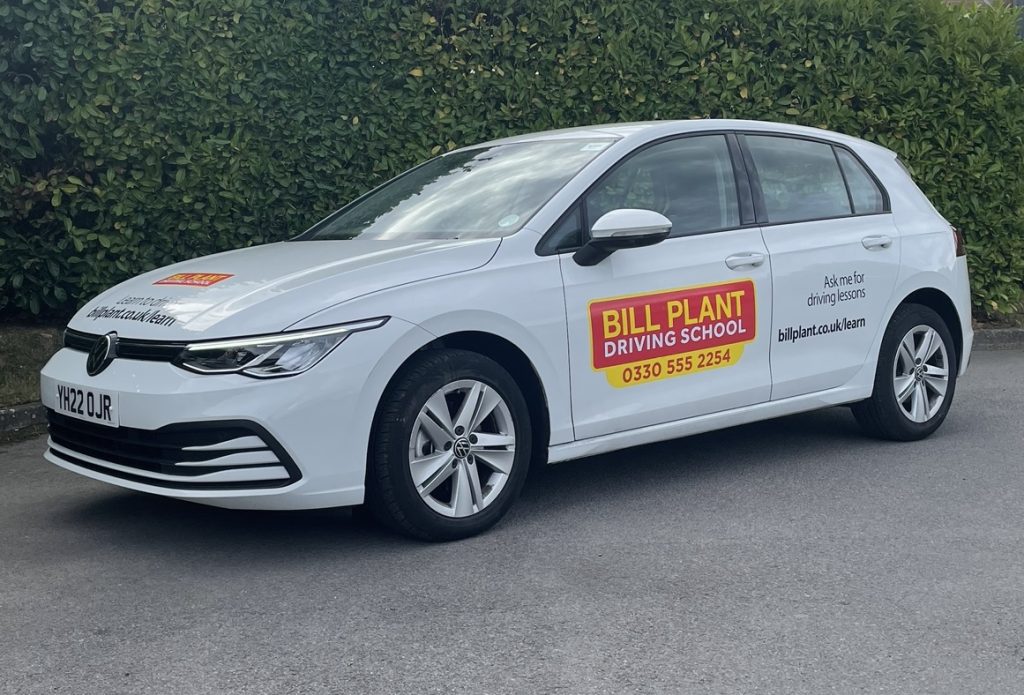
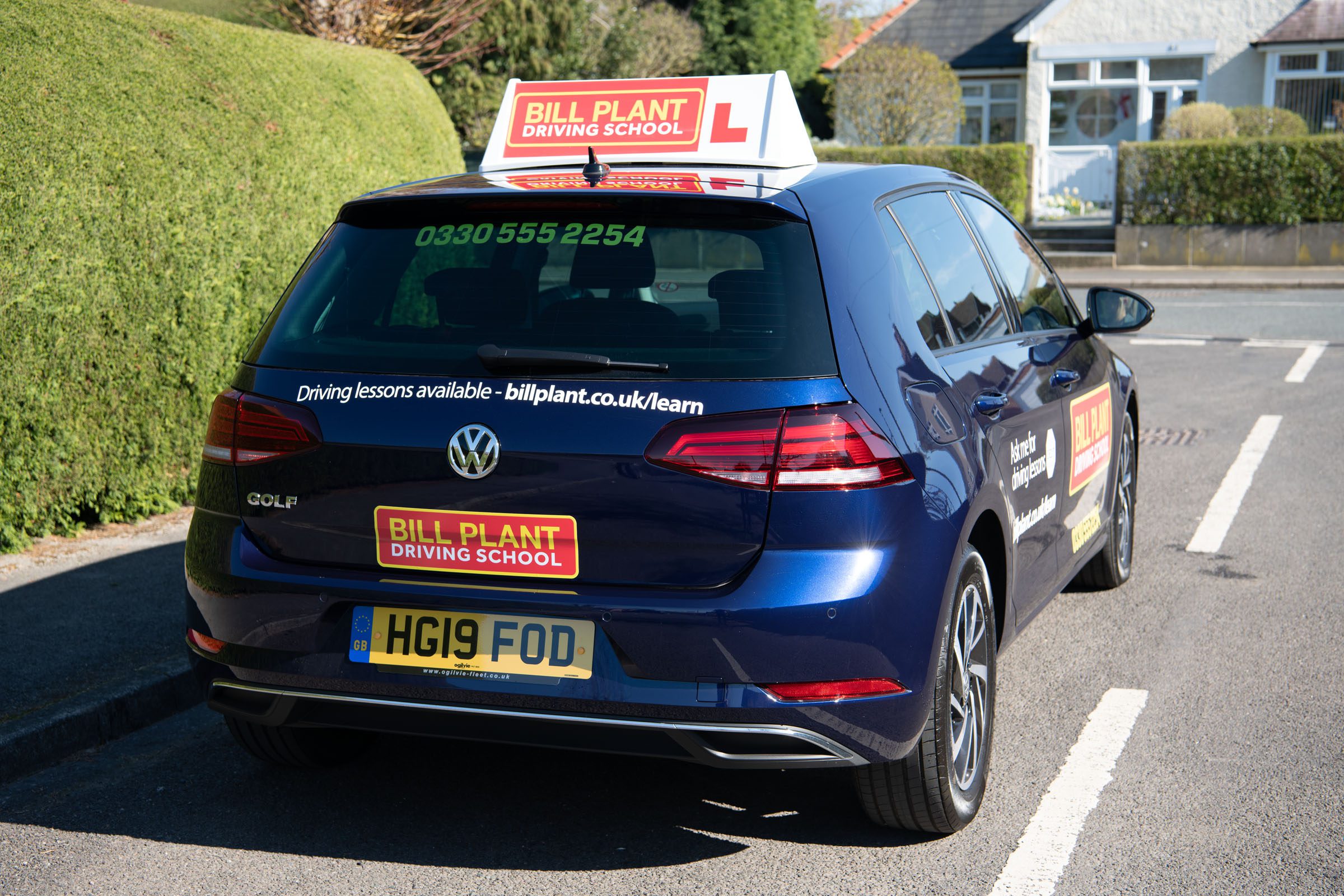
Your driving instructor will likely have L-plates attached to their car in a semi-permanent way, like a roof sign, that helps advertise that they’re an instructor. Your own L-plates will probably be temporary, though, and you’ll have to attach them each time you want to practice.
What Are D-Plates?
In Wales, you may see red D-plates alongside (or instead of) L-plates. The ‘D’ stands for Dysgwr, Welsh for learner. Either L or D is acceptable in Wales due to bilingual driving regulations.
Are L-plates a legal requirement?
Yes, L-plates are required by law anytime learner drivers with a provisional licence are driving a vehicle. You must display an L-plate anytime you’re driving on a public road, but you won’t have to use them if you are learning on private land.
In Wales, you can use L-plates or D-plates.
Are L-plates a legal requirement?
Yes, L-plates are required by law anytime learner drivers with a provisional licence are driving a vehicle. You must display an L-plate anytime you’re driving on a public road, but won’t have to use them if you are learning on private land.
In Wales, you can use L-plates or D-plates.
L-plate rules and legal specifications

Not only do you have to display L-plates, but you have to follow a series of rules and guidelines that cover where to put them, their size and what they look like. Your L-plates must:
- Be at least 178mm x 178mm in size
- Show a red ‘L’ on a white background
- Be visible from both the front and rear of the car
- Be kept clean and securely attached to the car whenever a learner is driving
- Be weatherproof (a paper print-out won’t do)
If you’re buying L plates, ensure they conform to DVSA and Highway Code requirements. You can learn more from Gov.uk: Learning to Drive.
Do I Need a Qualified Supervisor When Driving With L Plates?
Yes. If you’re not with a driving instructor, you must be supervised by someone who:
- Is over 21
- Has held a full UK driving licence for at least 3 years
- Is qualified to drive the vehicle you’re in
They don’t need to be a driving instructor, but they must sit in the front passenger seat and take their supervisory role seriously.
Do I Need Insurance When Learning to Drive?
Yes. Every car on the road must be insured, and learner drivers are no exception. You have several options:
- Instructor’s car: Covered by their insurance
- Parent’s or friend’s car: You’ll need to be added to their policy or get learner driver insurance
- Your own car: You’ll need a dedicated learner insurance policy
Always double-check the policy terms, especially around supervision and test coverage.
How many L-plates should you put on a car?
You must display at least 2, to make sure they are visible from the front and back. You need it to be obvious that you are a learner for other drivers on the road.
As you need to make sure they are visible, and L-plates can fall off, we’d recommend you carry a number of spares in your car.
Where to put L-plates
So, to make sure your L-plates are visible from the front and the rear you’ll need to place one at each end of your vehicle. There’s no rule on exactly where, but we’d recommend:
- Placing them at the same height as your number plate, brake lights or headlights.
- On a visible portion of your bonnet, as long as your bonnet isn’t too flat.
- While you can put them on the sides of your car, these will not count as ‘visible’ in the eye of the law.
We would not advise placing L-plates:
- In your windscreen or rear window as it can block your view
- On a bumper low to the ground
- On a flat bonnet
- Over any vents or grills that provide airflow to key parts of your vehicle
- Over your lights
- Over your number plate
What are the penalties for driving without learner plates?

If you are caught breaking any of the legal specifications regarding L-plates, you could face a fine.
Not only that, but you could receive anywhere from 3 to 6 points on your licence, which would not be a good start to life as a driver.
The code you would be breaking is LC20 and refers to an offence of ‘driving otherwise than in accordance with a licence’.
Types of L-plate
While all legal L-plates will be the same size and shape, there are a few different types that you can attach to your car. The type you go for will likely depend on your own personal preference. These are:
Magnetic L-plates
These are as simple as they sound and are generally the most popular type of L-plate. You just need to make sure the surface is clean and they’ll stick right on and peel off when you need them to. Magnetic plates need to use good-quality magnets to make sure they won’t just drop off. They work best on a flat surface.
Self-adhesive L-plates
An adhesive L-plate is just that. It’s essentially a sticker that isn’t reusable. Once it’s on, you either leave it on or have to use a new one each time. We’d advise only using adhesive plates if the learner is the only person driving the car.
Self-cling L-plates
A cling plate is designed to stick inside a window. While they may be useful for the back window, they’re generally best avoided so you don’t obscure your view.
Generally, we’d advise using magnetic L-plates and only opting for sticky L-plates if you really have to. In some instances, a magnetic plate may not work on a car due to its shape.
Do you need L-plates for your driving test?
Most learner drivers take their driving test in their instructor’s car, which will have L-plates attached. However, if you choose to use a different car, you will need to use your own L-plates during the test.
As soon as you’ve passed your driving test, you can rip those L-plates right off, though. This is where P-plates come in.
Once you pass your test, you’ll need to be insured. You can find further learner driving information and guides, such as learner and new driver insurance, if you can insure a learner drive on your car, and also if you can drive on the motorway as a learner driver.
P-Plates – After Passing Your Test
Once you’ve passed your test, you can wave goodbye to L plates and consider switching to P plates.
What’s the Difference Between Red L-Plates and Green P-Plates?
A P-plate is the next stage for learner drivers. Essentially, the ‘P’ stands for ‘probation’. In this context, it means that someone has just passed their driving test.
- L-Plates = Learner Driver (legal requirement)
- P-Plates = Probationary/New Driver (optional)
P-plates are green with a white background and help signal to other road users that you’re newly qualified and may still be gaining confidence.
Why Use P-Plates?
They let other drivers know to be patient, helping reduce pressure in the early weeks of solo driving.
Are P-Plates Required by UK Law?
No — P-plates are entirely voluntary. Some new drivers use them for weeks, others for months, and some skip them altogether.
Where to Display P-Plates
Like L plates, you should place P plates on the front and rear of your car, in positions that don’t obstruct your view or lights.
How Long Should You Display P-Plates For?
There’s no time limit. Display them for as long as you feel you need them. You’re in control.
FAQs
Can a car with L plates go on the motorway?
Yes — but only with an approved driving instructor in a dual-control car. Learners can’t drive on motorways with family or friends.
How long can you ride on L plates?
You can use L plates for as long as you hold a provisional licence. There’s no expiry date, though most learners pass within a year or two.
Does the person supervising a learner need to be insured?
Not necessarily. The car must be insured for the learner, but the supervisor only needs insurance if they plan to drive the car.
How many passengers can a learner driver have in the UK?
There’s no legal limit, but the car must be road legal, insured, and the learner must be properly supervised. Keep distractions to a minimum when learning.
Final Thoughts
L plates are more than just a red letter — they’re a symbol of responsibility, safety, and a step closer to passing your test. Whether you’re learning with an instructor or practising privately, following the correct rules for L plates on a car will help keep you safe and legal.
Need help learning to drive? Find your nearest driving instructor with a DVSA-approved instructor at Bill Plant Driving School — and get expert guidance every step of the way.